Fall is the best time for Aeration & Overseeding!Learn More →

Est. 1931 · Water-Wise Landscaping

A Landscape That
Needs Less Water

ZEER-uh-skay-ping

Xeriscaping is a way of designing the landscape around the conditions already there — using well-suited plants, thoughtful soil preparation, efficient watering, and mulch or stone to reduce the amount of water and maintenance the property needs.

Done well, xeriscaping doesn't have to look sparse or dry. It can be green, colorful, and full of texture — with less lawn to water, mow, and maintain.

  • Drought-tolerant and native plant options
  • Full design through installation
  • Built around your property's conditions
(508) 398-8151

Get a Free Quote

Tell us about your property and we'll be in touch.

In Business Since 1931

Water-Smart,
Not Water-Deprived

Xeriscaping doesn't mean giving up a green, inviting landscape. It means putting water where it does the most good and choosing plants that are better suited to the conditions on your property.

That might mean reducing an area of lawn that struggles every summer, filling a sunny slope with drought-tolerant plantings, or using grasses, perennials, shrubs, mulch, and stone to create a landscape with more texture and less dependence on constant watering.

The goal isn't a landscape that never needs water. It's one that uses water more efficiently and becomes easier to care for once the plantings are established.

Get a Free Quote
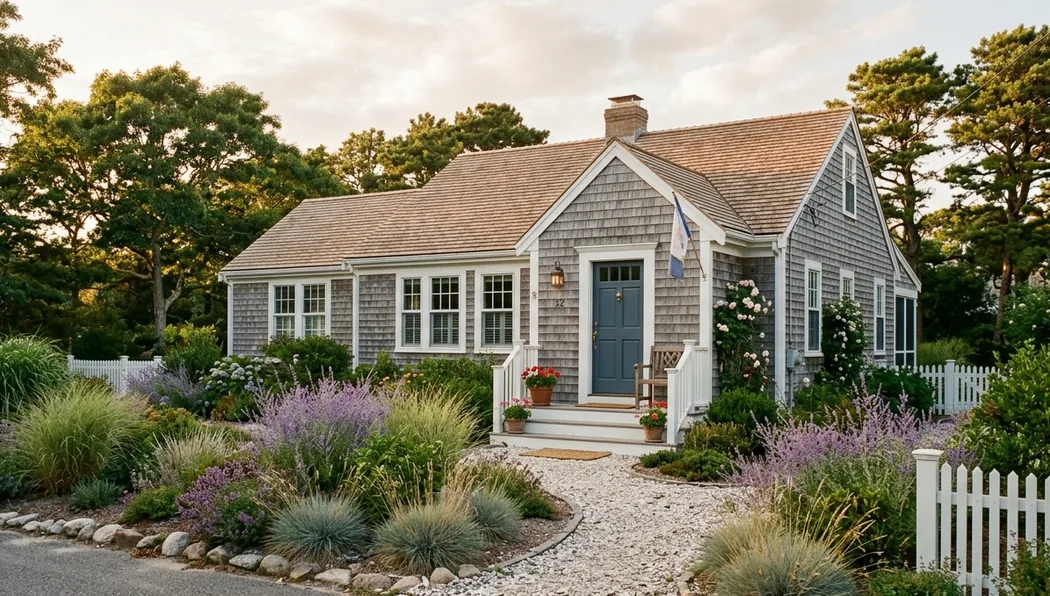
Drought-tolerant xeriscape garden with gravel path at a Cape Cod shingle cottage

A xeriscape isn't a yard that gave up. It's a yard designed to work with Cape Cod's sandy soil and salt air, instead of fighting them all summer with a hose.

Est. 1931, South Yarmouth, MA

What Goes Into It

More Than Drought-Tolerant Plants

A water-wise landscape works because the pieces work together. Plant selection matters, but so do the soil, the amount of lawn, how water is delivered, and what covers the ground between plantings.

The Right Plants

Chosen for the Conditions

We select plants based on the sun, soil, moisture, and exposure in each part of the property, with native and drought-tolerant options where they make sense.

  • Native and adapted plant options
  • Perennials, grasses and shrubs
  • Selected for the individual site

Less Lawn

Put Turf Where It Works

Lawn can still be part of a water-wise landscape. The idea is to keep it where it serves a purpose and rethink areas that are difficult to keep healthy.

  • Reduce struggling turf
  • Keep useful lawn areas
  • Replace problem spots with plantings

Soil Preparation

Give Roots a Better Start

Before planting, we look at the existing soil and improve it where needed so new plants have better conditions for establishing.

  • Site-specific soil preparation
  • Amendments where appropriate
  • Proper planting and grading

Mulch & Groundcover

Protect the Soil

Mulch, groundcovers, and stone can help cover exposed soil, reduce evaporation, and give planting areas a finished look.

  • Organic mulch where appropriate
  • Living groundcovers
  • Stone and gravel accents

Efficient Watering

Water Where It's Needed

New landscapes need water while they establish. Where irrigation is used, we can plan watering around the plants and areas that actually need it rather than treating the entire property the same.

  • Establishment watering plan
  • Efficient irrigation options
  • Watering based on planting needs
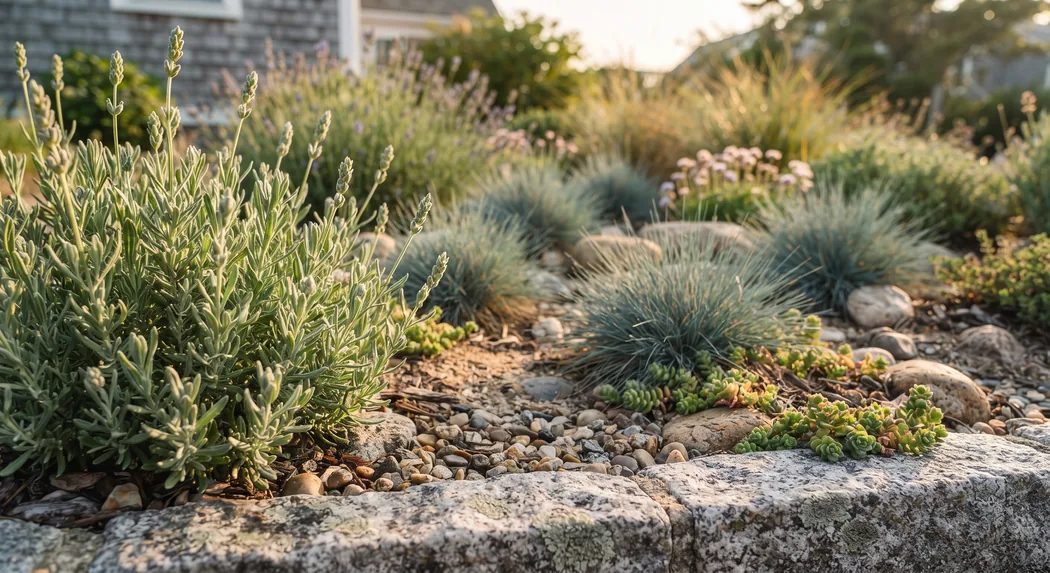
Lavender, blue fescue grass, and sedum planted among stone at a Cape Cod xeriscape garden

Built Around the Property

Start With What's Already There

Before we decide what to plant or what lawn to replace, we look at how the property actually behaves. Where does the sun hit hardest? Which areas dry out first? Where does water collect? What parts of the lawn are being used — and which ones are being maintained for no real reason?

Those conditions help shape the design. We can keep lawn where it makes sense, turn difficult areas into planting beds, and choose plants and materials suited to each part of the property.

The result isn't a formula applied to every yard. It's a landscape designed around how you use the property and what the site can support.

The Result

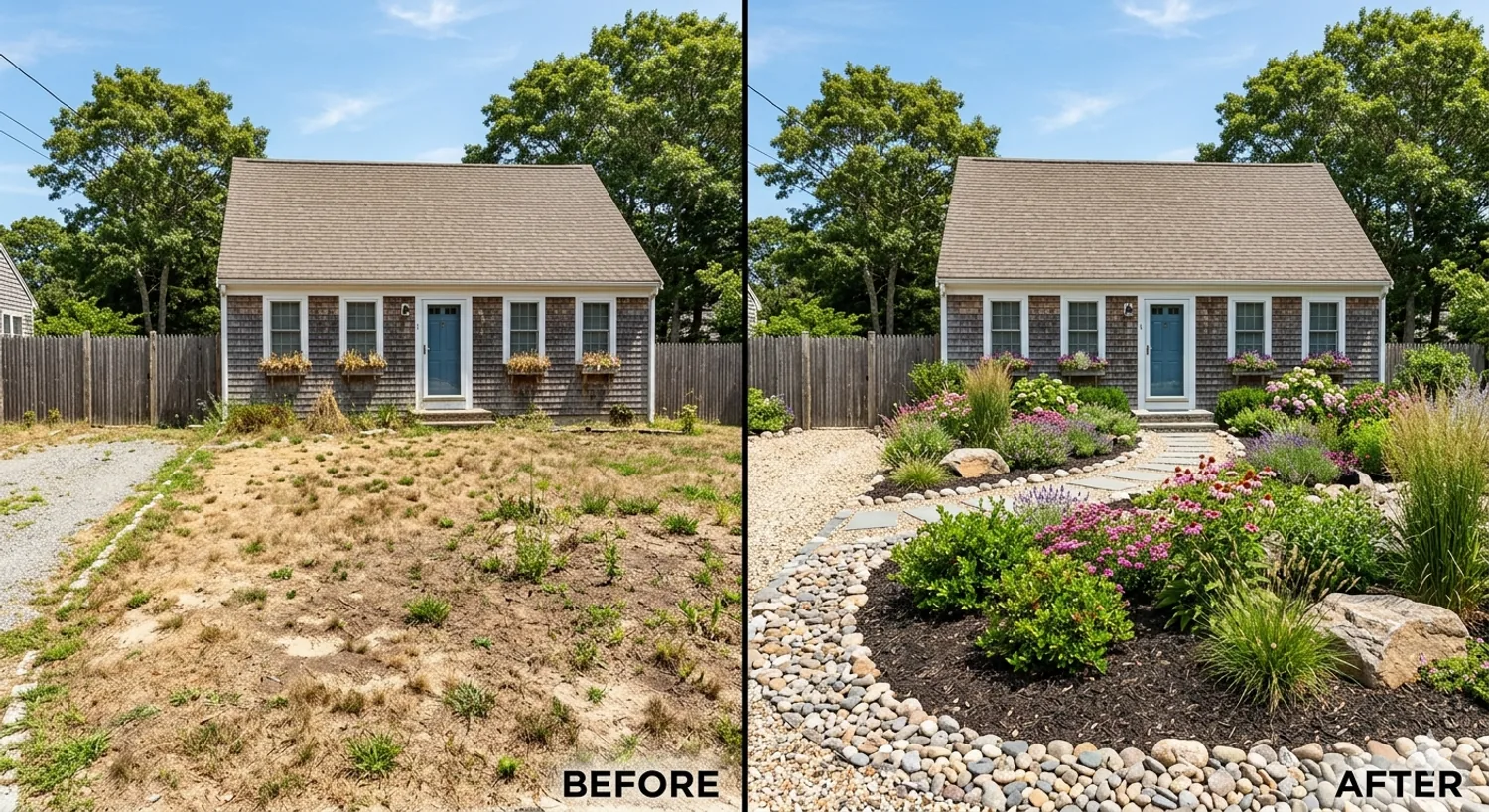
From Patchy Lawn to Water-Wise Garden

A struggling strip of sandy lawn, converted into a layered native bed that needs a fraction of the water.

Before and after photos of a Cape Cod front yard converted from patchy lawn to a xeriscape garden

In the Field

Water-Wise Gardens Around the Cape

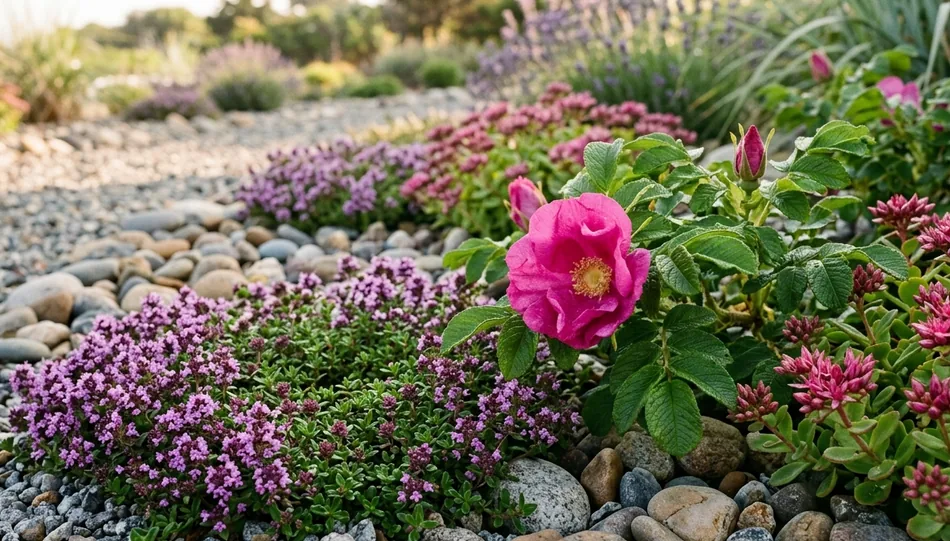
Beach rose, creeping thyme, and sedum planted among river rock in a xeriscape garden
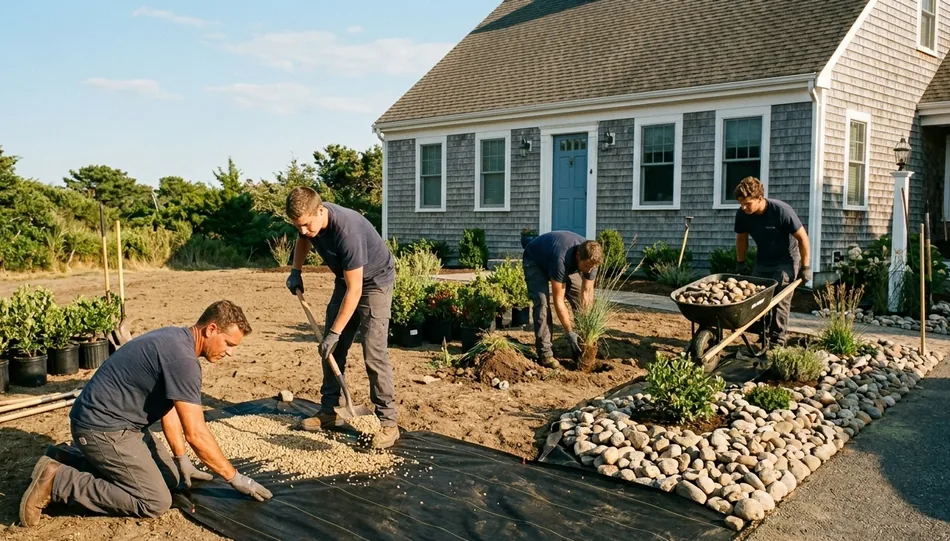
Crew installing a river rock dry stream bed and native plantings on Cape Cod
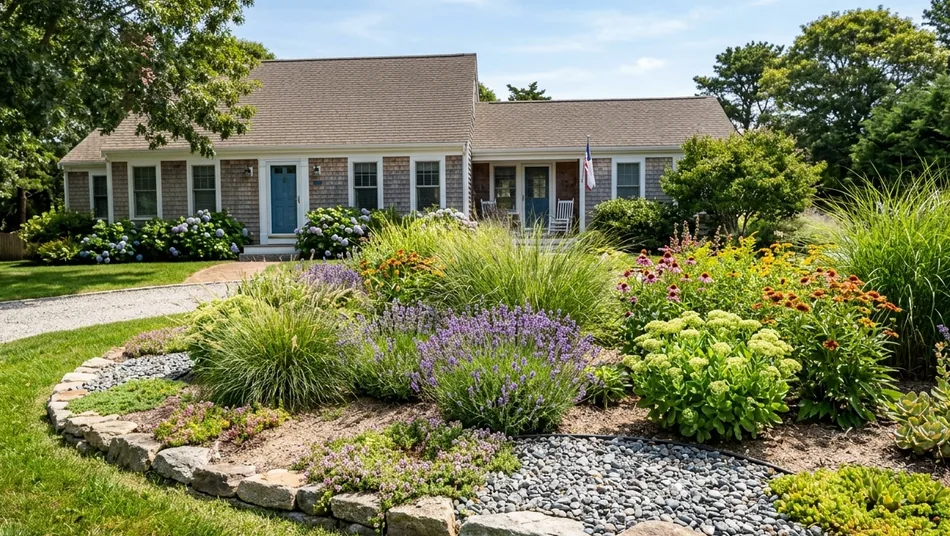
Native perennial and ornamental grass bed with a dry stream bed at a Cape Cod home

Xeriscaping

Frequently Asked Questions

Xeriscaping (ZEER-uh-skay-ping) is a landscaping approach built around drought-tolerant plants, efficient soil preparation, and strategic mulching, so a property thrives on minimal supplemental water. It's not about giving up a green, lived-in yard — it's about designing one that doesn't depend on constant irrigation.
No — that's the most common misconception. A well-executed xeriscape is lush, layered, and full of texture: ornamental grasses, flowering native perennials, groundcovers, and flowering shrubs, with stone used to define beds and pathways rather than replace planting altogether.
Yes — Cape Cod's sandy, fast-draining soil and salt air are exactly the conditions xeriscaping is built for. We select plants that are proven performers here, like bayberry, beach plum, switchgrass, black-eyed Susan, and sedum, so the landscape is working with the site instead of against it.
Once established, a xeriscape needs little to no supplemental irrigation beyond normal rainfall, and far less mowing, feeding, and upkeep than a traditional lawn. Most of the water and labor savings show up after the first year or two, while the plants finish establishing their root systems.
Absolutely. Many of our xeriscape projects start with a single water-hungry section — a sunny strip along the driveway, a slope that's hard to mow, foundation plantings — rather than the whole property. We can scale a design to whatever section makes sense for your yard and budget.
Yes. We handle the entire process — site assessment, plant selection, soil preparation, and installation — so you're not coordinating between a designer and a separate install crew. One team sees the project through from start to finish.

More Ways We Help

Related Services

Ready for a Yard That Works With the Cape?

Drought-tolerant design that cuts water use without cutting the color — free, no-obligation quote.