What's Wrong With My Boxwood? 4 Problems Cape Homeowners Should Know
By Jim | Planting Tips
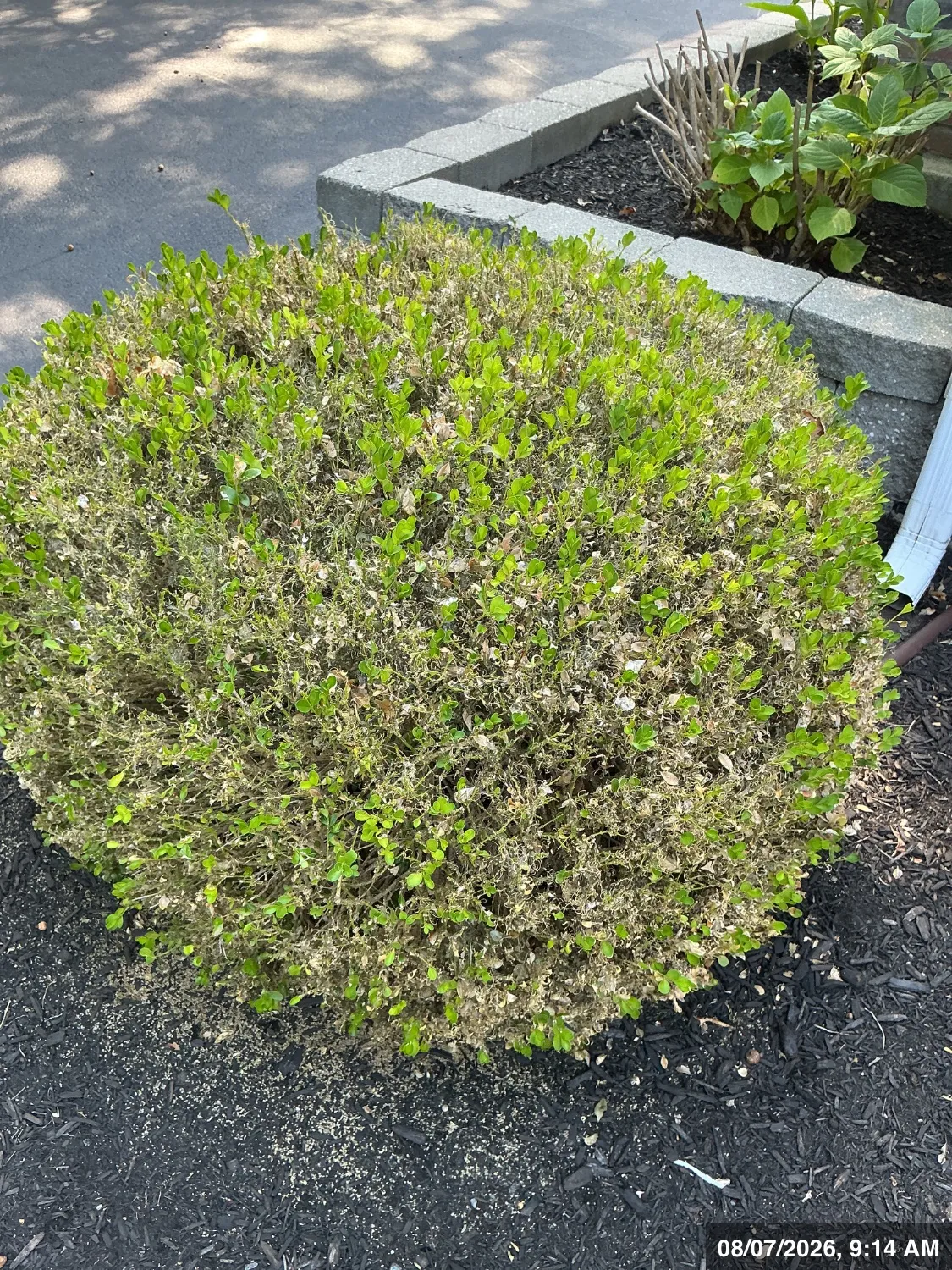
On Cape Cod, boxwoods show up everywhere — lining front walks, ringing foundations, framing entryways, sheared into hedges. That visibility is exactly why a shrub that suddenly turns brown, drops leaves, or thins out gets noticed fast.
Figuring out why is the harder part.
A brown boxwood rarely has a single cause. Around here, the damage can trace back to insects, disease, weather, growing conditions, or several of those stacked together, and more than one of these problems can look nearly identical from a few feet away.
The four worth knowing are box tree moth, boxwood leafminer, Volutella blight, and boxwood blight.
Here’s how to tell them apart.
1. Box Tree Moth
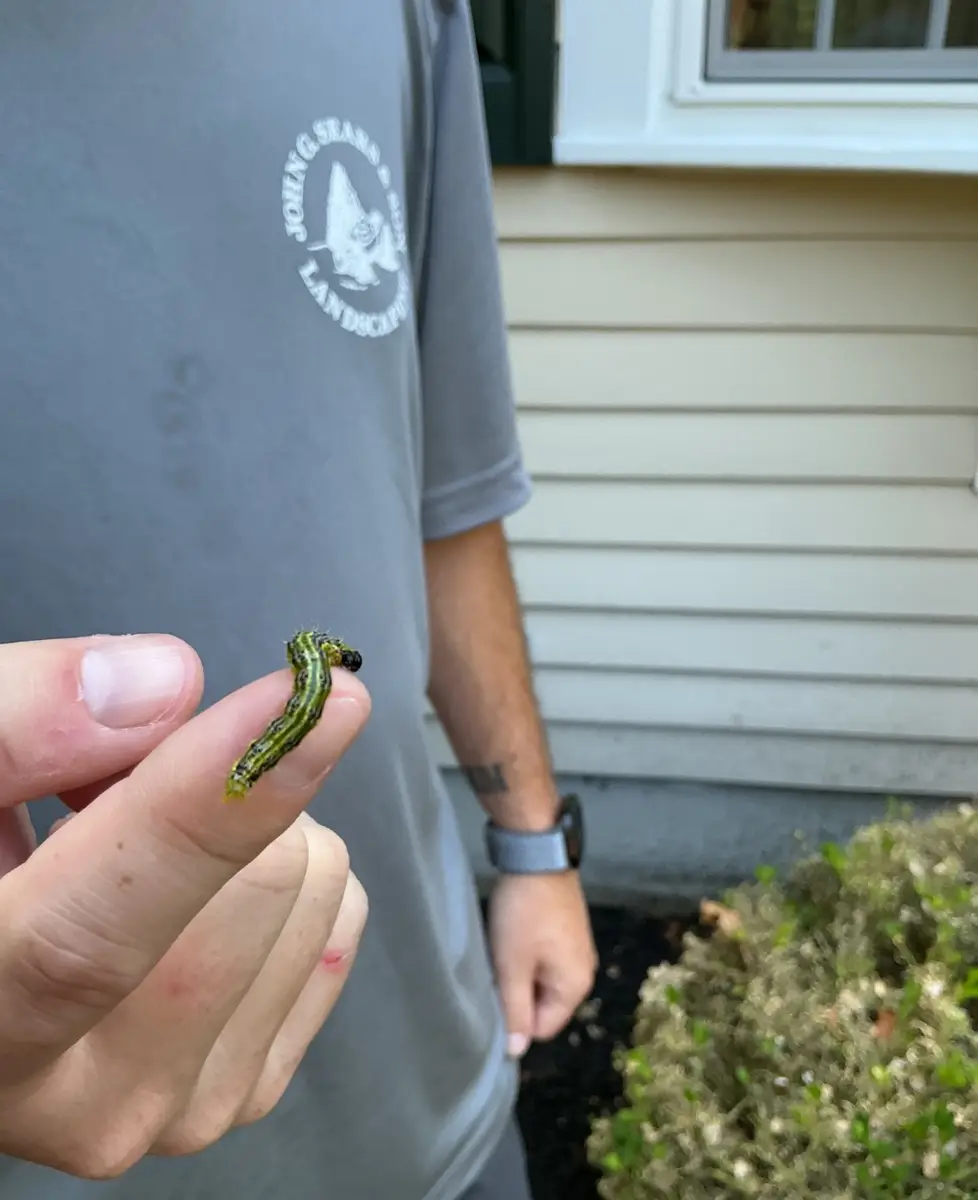
What it looks like: Start with the leaves. If they’re chewed, skeletonized, or disappearing altogether, look deeper inside the shrub. You may find webbing, greenish-black droppings, and green caterpillars feeding among the leaves and branches.
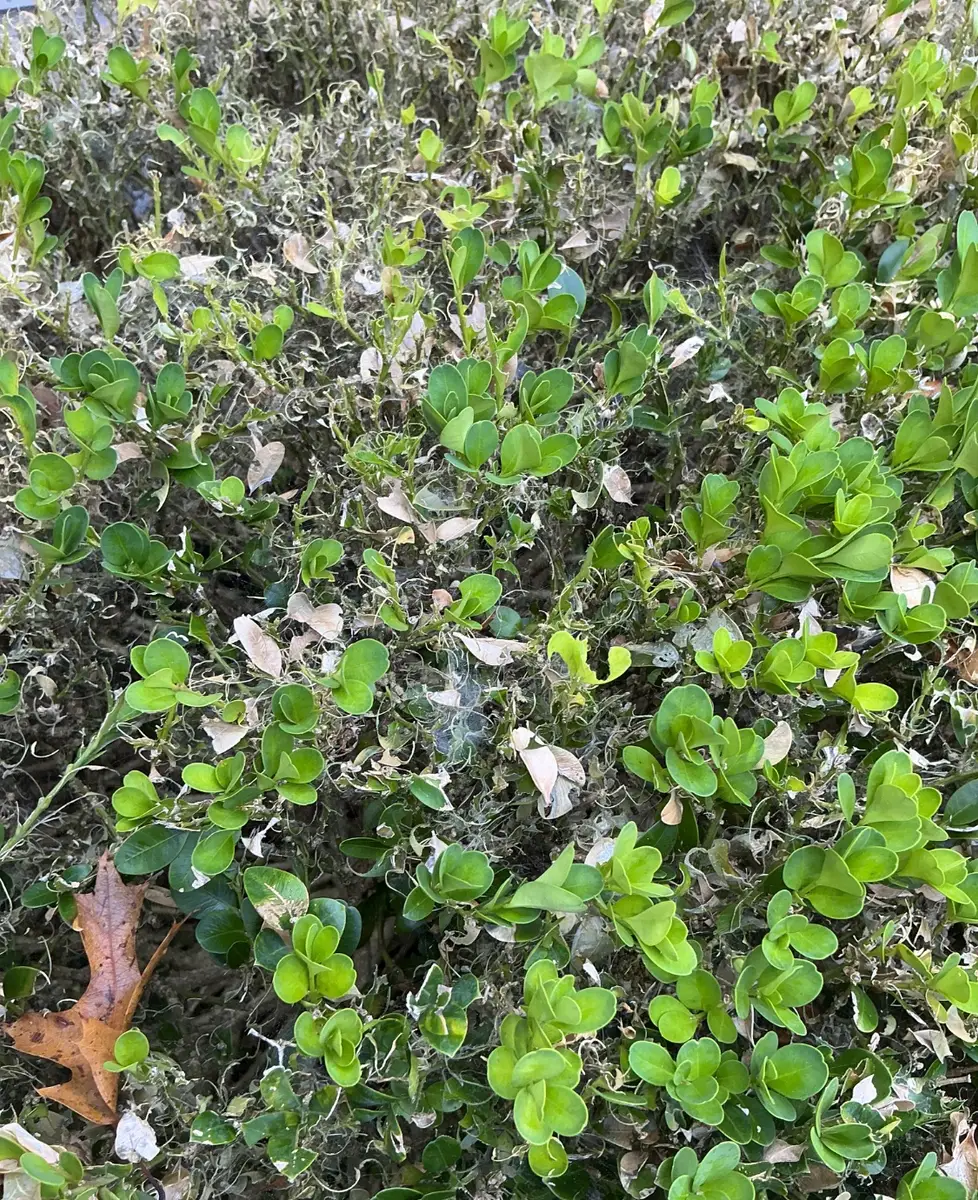
What’s actually happening: Box tree moth is an invasive insect, and the caterpillar is the stage that damages boxwood. The caterpillars feed directly on the foliage and can move through a plant quickly when populations are high.
First confirmed on Cape Cod in 2023, box tree moth has spread across much of the region since.
How serious is it? Very. Heavy feeding can partially or completely defoliate a boxwood. If the foliage becomes scarce, caterpillars may also feed on the bark of branches and stems. Severe or repeated infestations can eventually kill the plant.
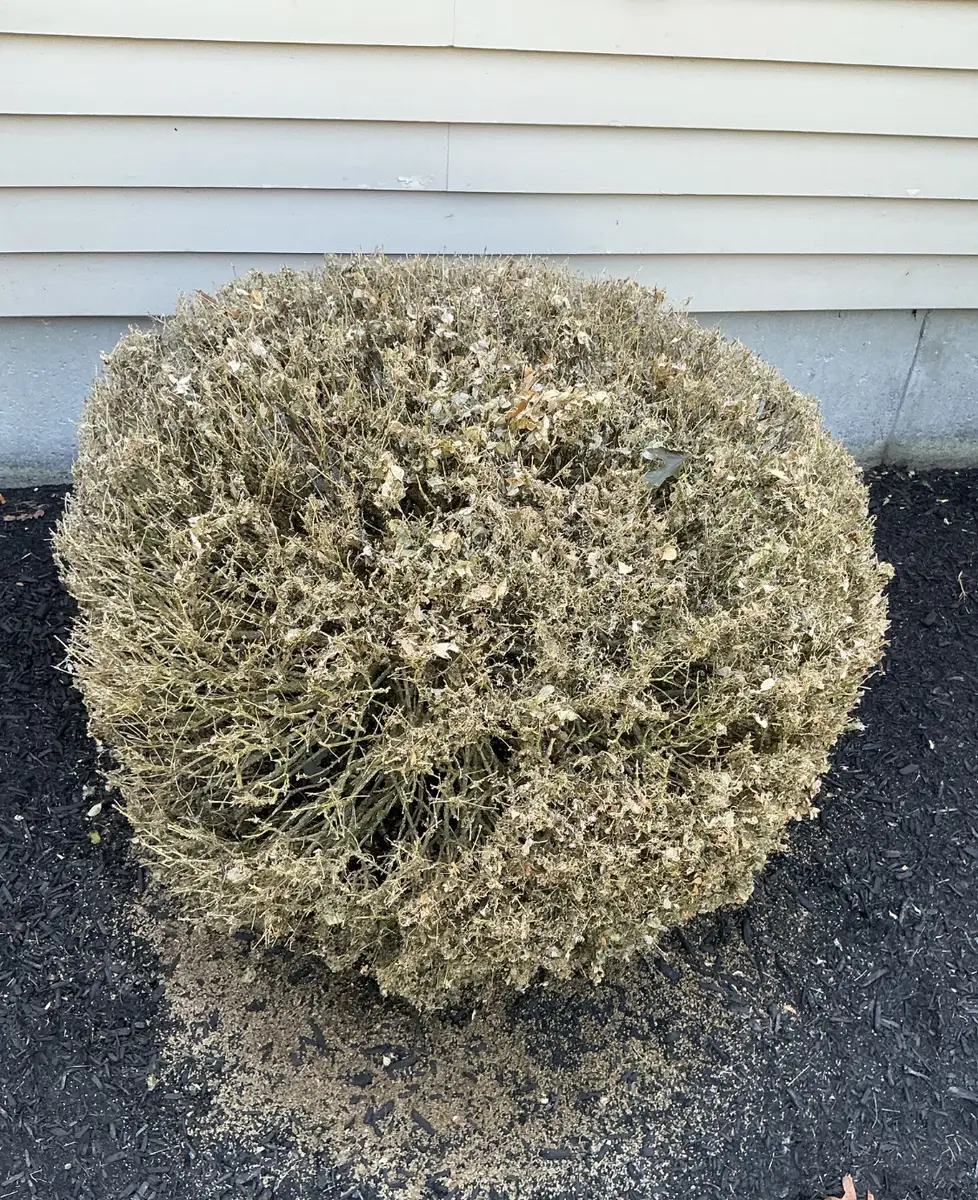
Homeowners are often caught off guard because feeding can start deep inside the dense foliage, out of sight.
What to look for:
- Chewed or missing leaves
- Webbing inside the shrub
- Greenish-black droppings in the foliage
- Green caterpillars with black and white markings
- Rapid thinning, browning, or defoliation
Cape Cod tip: Begin checking boxwoods early in the season. Caterpillars that overwintered become active again in spring, and spotting feeding early makes a real difference.
2. Boxwood Leafminer
What it looks like: Instead of leaves being eaten away, look for puffy or blistered areas with tan or yellowish blotches. Hold an affected leaf up to the light and you may be able to see larvae inside.
What’s actually happening: Boxwood leafminer is a small fly, and its larvae feed between the leaf’s upper and lower surfaces. Feeding inside the leaf itself produces damage that looks nothing like the chewing from box tree moth caterpillars.
How serious is it? Leafminer is generally the least urgent of the four. A heavy infestation can drag down a boxwood’s appearance and vigor, but it won’t cause the rapid defoliation you’d see with box tree moth or boxwood blight.
What to look for:
- Puffy or blistered leaves
- Tan or yellow blotches
- Damage contained within the leaf
- Larvae visible inside affected leaves when held to the light
3. Volutella Blight
What it looks like: Individual branches or sections of the shrub may turn straw-colored or brown while other parts remain green. In damp conditions, small salmon-pink spore masses may sometimes be visible on affected leaves or stems.
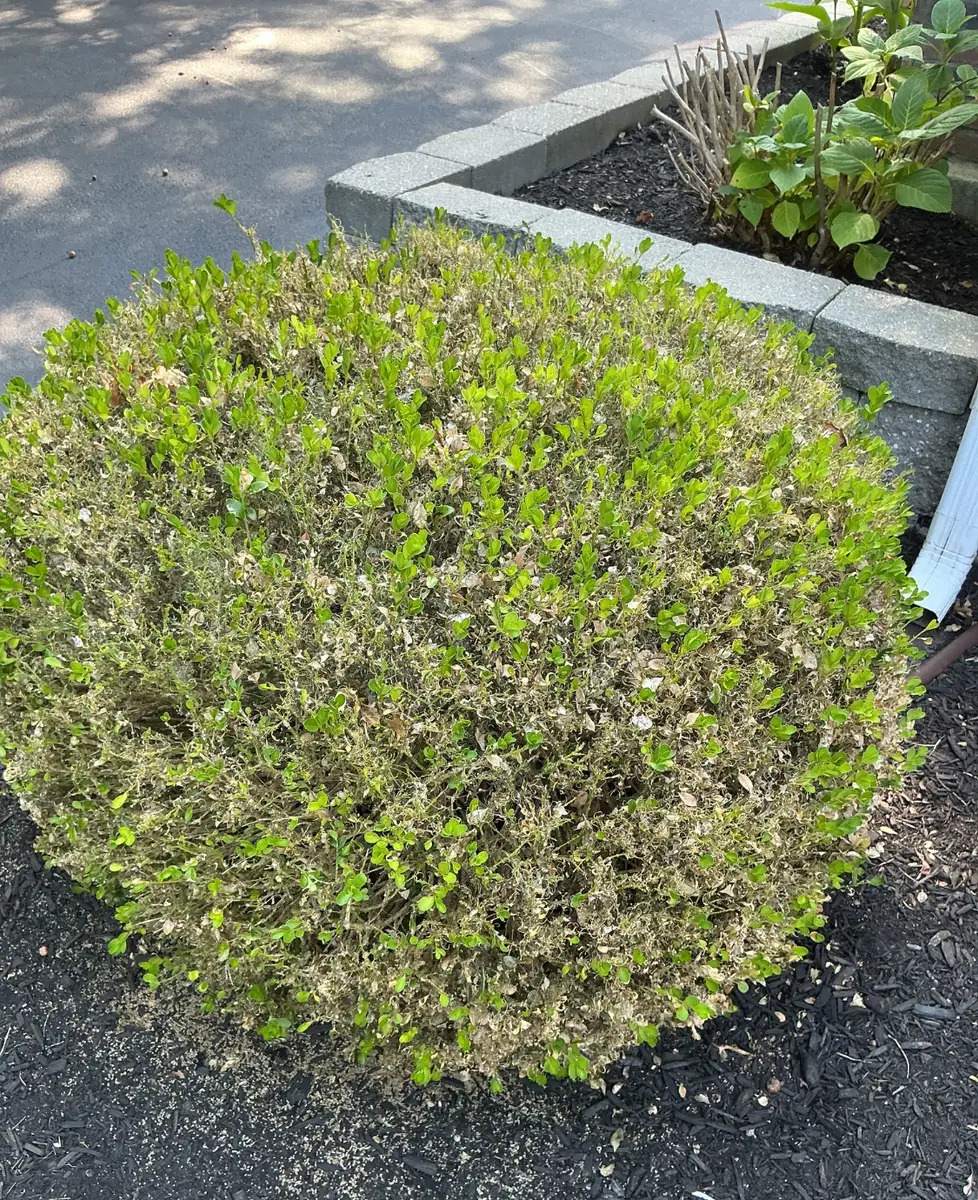
What’s actually happening: Volutella is a fungal disease that tends to move in on boxwoods already under stress — winter injury, drought, pruning wounds, poor growing conditions, or other damage can all leave a plant more vulnerable.
Repeated shearing has a similar effect: it builds up dense outer growth that blocks light and airflow from reaching the plant’s interior.
How serious is it? It can cause noticeable dieback, but it’s a different disease from boxwood blight. Managing it comes down to improving overall plant health, removing affected material where it makes sense, and addressing whatever’s stressing the plant in the first place.
What to look for:
- Straw-colored or brown branches
- Scattered sections of dieback
- Leaves remaining attached to affected branches
- Salmon-pink spore masses under moist conditions
- A plant that may already be stressed or damaged
4. Boxwood Blight
What it looks like: Boxwood blight can cause dark spots on leaves, rapid leaf drop, and distinctive dark or black streaks on green stems.
Together, leaf spots, black stem streaking, and defoliation are a warning sign worth taking seriously.
What’s actually happening: Boxwood blight is a fungal disease, and it spreads between plants through infected material, contaminated tools and equipment, water splash, and general movement around affected plants.
Fallen leaves and other debris matter too — the pathogen can persist in infected material long after it’s dropped.
How serious is it? Of everything covered here, this is the one where catching it early matters most. Boxwood blight spreads readily through a planting, especially where boxwoods are grouped close together.
If you suspect it, resist the urge to start pruning your way down the row — tools, gloves, footwear, and other equipment can carry contaminated material from one shrub to the next.
What to look for:
- Dark brown or black leaf spots
- Dark streaks on green stems
- Rapid leaf drop
- Bare or thinning branches
- Similar symptoms beginning to appear on nearby boxwoods
What’s Your Boxwood Telling You?
A quick way to sort the four:
Leaves are being chewed or disappearing, with webbing inside the shrub? Think box tree moth.
Leaves are still intact but look puffy or blistered? Think boxwood leafminer.
Individual branches are turning straw-colored or dying back while much of the plant stays green? Think Volutella blight.
Leaves have dark spots, stems have black streaks, and the plant is dropping leaves quickly? Think boxwood blight.
Treat these as clues, not a diagnosis — winter injury, root problems, mites, psyllids, drought stress, drainage problems, and other issues can cause the same kind of browning, thinning, or decline.
Why Some Boxwoods Struggle More Than Others
Location plays a bigger role than people expect in how these problems play out.
Dense hedges with poor airflow, plants that stay wet for long stretches, and shrubs already stressed by drought, winter injury, or poor drainage tend to be more vulnerable to certain diseases.
Shearing only the outside of a boxwood, repeated over time, builds a dense shell while the interior gets starved of light and air. And for fungal problems like Volutella and boxwood blight, foliage that stays wet longer simply gives disease more favorable conditions to work with.
It’s part of why two boxwoods on the same property can behave so differently. The leaves tell part of the story, but the conditions around the plant matter just as much.
A Few Things You Can Do
Look inside the shrub. A boxwood can look fine from a few feet away and still be in trouble underneath. Part the branches and check for caterpillars, webbing, droppings, dead growth, leaf spots, and stem discoloration.
Check more than one plant. If you’ve got a hedge or a cluster of boxwoods, walk the whole line — one plant often shows symptoms before its neighbors do.
Keep foliage dry when possible. Water at the base instead of routinely soaking the foliage. It’s a simple habit that cuts down on conditions fungal disease needs to take hold.
Give dense plants some airflow. Pruning with airflow in mind, rather than just shaping the outside, lets light and air reach the interior instead of building up a dense outer shell.
Be careful with tools. If you suspect disease, clean your shears between plants rather than moving straight from one to the next.
Clean up suspicious plant material. Diseased leaves and cuttings don’t belong left under the shrub — clear them out rather than letting them sit.
When It’s Worth Having Someone Take a Look
A few blistered leaves is a very different situation from a boxwood that’s rapidly losing its foliage.
If you spot active caterpillars, heavy chewing, widespread dieback, rapid leaf drop, or black streaking on green stems, it’s worth pinning down what you’re dealing with before the damage spreads further — or before you reach for the shears.
That matters because the right response isn’t the same for every cause. An insect feeding inside a leaf, a caterpillar working through the foliage, and a fungal disease moving through a hedge each call for a different approach.
If you’re not sure what you’re looking at, send us a few clear photos or give us a call. Photos let us get a first look at the problem, and we’ll tell you whether it’s worth a closer inspection in person. Diagnosing problems like this is part of our tree and shrub care work.