Tree Removal on Cape Cod: When a Tree Needs to Come Down
By the team at John G. Sears & Son Landscaping · Est. 1931
Trees are one of the most beautiful parts of any property. They provide shade, shelter wildlife, boost curb appeal, and — in many cases — have stood on your land for decades. So when the time comes to remove one, it’s never a decision made lightly. Here at John G. Sears & Son (est. 1931), tree removal is one of the most common — and most important — services we provide.
If you’re wondering whether a tree on your property needs to come down, here’s what we want you to know.
Signs a tree may need to be removed
Not every struggling tree needs to be taken down — sometimes pruning or treatment can turn things around. But there are situations where removal is the safest, smartest choice:
- The tree is dead or dying, with large sections of bare, brittle branches
- There’s significant rot or fungal growth at the base or trunk
- The tree is leaning toward your home, a fence, or a power line
- Large branches have already fallen or are visibly cracked
- The roots are causing damage to your foundation, driveway, or sidewalk
- The tree is too close to your home and poses a storm risk
- You’re doing a renovation or landscape redesign that requires the space
Removal or pruning?
Removal takes the whole tree down, usually because it’s dead, structurally unsound, or too close to something it could damage. Pruning takes off dead, damaged, or problem limbs and keeps the tree. If the damage is limited to a few branches on an otherwise healthy tree, pruning is often enough. A new lean, major trunk damage, or rot at the base is more serious and needs a closer look in person.
What to do after a storm damages a tree
A nor’easter can leave limbs hanging or a tree partly uprooted, and damaged trees can shift without warning.
- Stay away from power lines. If a tree or limb is touching a line, keep well clear and call the utility or 911. Don’t try to move anything.
- Keep people out from under it. Hanging limbs can drop with no warning, so keep kids and pets away from the area.
- Don’t start cutting. Storm-damaged wood can be under tension and may spring or fall when cut.
- Take photos from a safe distance. They’re useful for your records and any insurance claim.
- Call us. We take emergency tree calls for fallen trees and damaged limbs at (508) 398-8151.
Why you should never DIY tree removal
We completely understand the appeal of handling things yourself — it feels like a cost-saver. But tree removal is one of those jobs where the risks genuinely outweigh the savings. A falling tree, even a smaller one, can seriously injure someone, damage a roof, take out a fence, or destroy underground utilities.
Our team comes with the training, equipment, and experience to handle removal safely — including trees in tight spots near structures, or large trees that require careful sectional removal. We also handle the cleanup, so you’re not left with a yard full of logs and debris.
What about the stump?
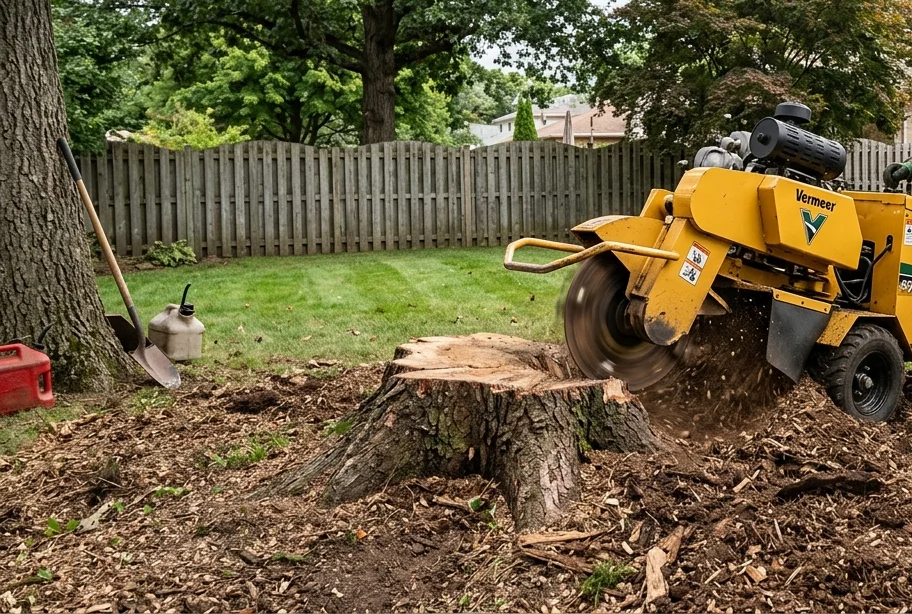
This is a question we get all the time. Once a tree is down, you’re often left with a stump that can be an eyesore, a tripping hazard, and even a magnet for pests. We offer stump removal in addition to our tree services, so you can start fresh with a clean, level area — whether you’re planning to replant, lay sod, or just reclaim the space.
Stump grinding is typically the most efficient method, and we’ll leave the area ready for whatever comes next. For bigger jobs like clearing a lot, see our excavation and site prep services.
The best time of year to remove a tree
Here in New England, late fall and winter are actually great times for tree removal. With the leaves down, it’s easier to assess the full structure of the tree, the ground is often firmer (making it easier to work around your yard), and scheduling tends to be more flexible than the busy spring and summer months.
That said, if a tree poses an immediate hazard — especially heading into storm season — don’t wait. Give us a call and we’ll come take a look.
What to have ready when you call
A few details help us plan the job:
- Where the tree is on your property
- Any damage or lean you can see, and when you first noticed it
- What’s nearby, such as your house, a fence, or utility lines
- How a truck can reach it, including narrow driveways and gates
Ready to get started?
Whether you have a tree that needs to come down or you’re just not sure and want a second opinion, we’re happy to help. Learn more about our full tree and shrub care services, or reach out to us and we’ll come take a look.
Not sure about a tree on your property? Send us a photo and we’ll take a look.
John G. Sears & Son Landscaping · Locally owned · Est. 1931 · Based in South Yarmouth