It's Aeration & Overseeding Season on Cape Cod
By Jim | Lawn Care Tips
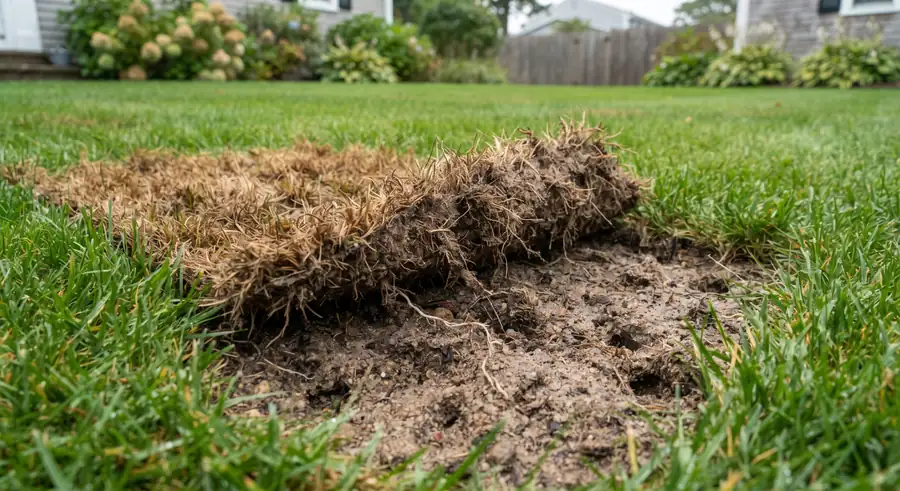
Your lawn worked hard all summer. It handled the heat, the dry spells, the watering restrictions, the cookouts, the kids, the dog, and every mower pass in between. By late September, most Cape Cod lawns are showing it: thin patches, compacted soil, and bare spots where the grass just gave up.
The good news is that fall is the best time of year to fix it. September into early October is usually the prime window for aerating and overseeding on Cape Cod, but soil temperature and the weather matter more than a date on the calendar. A little attention now can pay off with a thicker, healthier lawn next spring.
Why Fall Is the Right Time
Most lawns on the Cape are cool-season grasses: fescues, perennial ryegrass, and Kentucky bluegrass. These grasses do their best growing when the days are warm, the nights are cool, and the soil still holds the summer’s heat.
That’s exactly what we get this time of year. Warm soil helps new seed germinate quickly, while cooler air takes the stress off young grass. Fall rain can help with watering, and weed pressure drops off as crabgrass and other summer annuals die back. New seedlings get time to establish roots before winter, then pick up again in spring.
Spring vs. fall seeding: Seed in spring, by comparison, and new grass has to compete with weeds and then survive its first summer before it’s had much time to establish. Fall gives it a head start.
What Aeration Actually Does
Over time, soil gets packed down by foot traffic, mowing, and even heavy rain. Compacted soil makes it harder for water, air, and nutrients to reach the roots, so grass grows shallow and weak.
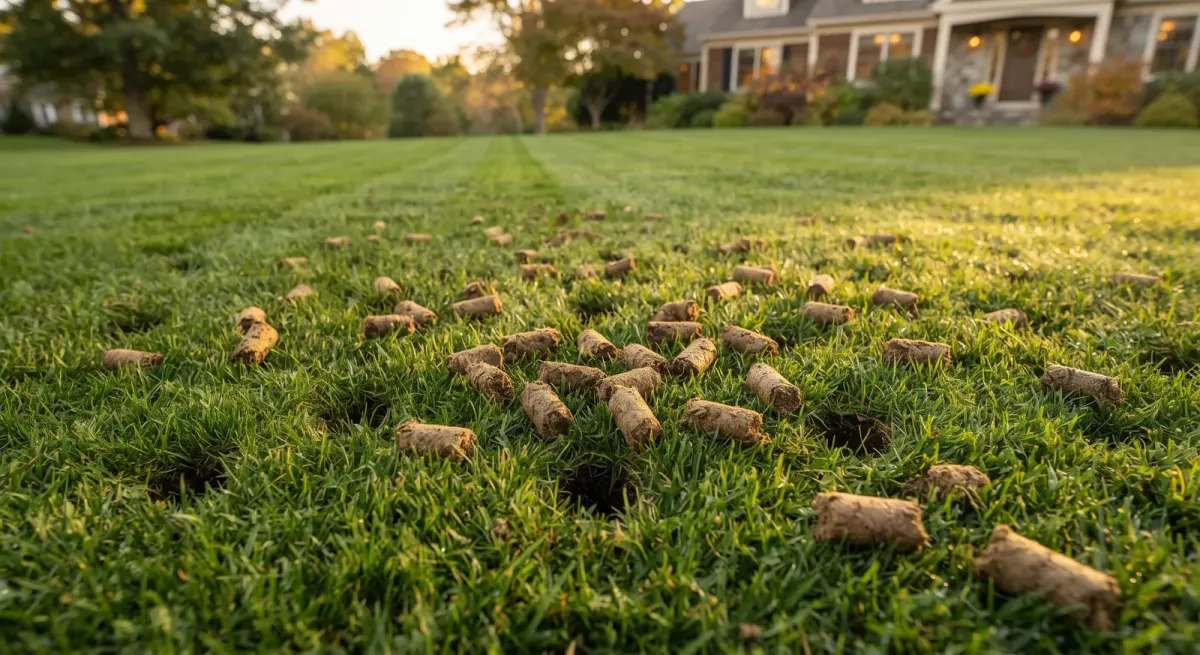
Core aeration fixes that by pulling small plugs of soil out of the lawn. Those little holes open things up so that:
- Water can soak into the soil more easily
- Air reaches the root zone
- Nutrients and fertilizer can reach the roots
- Roots have more room to grow deeper and stronger
Those soil plugs you’ll see scattered across the lawn afterward are a good sign. Leave them be. They’ll break down naturally and work their way back into the lawn.
Why Aeration and Overseeding Work Well Together
Aeration and overseeding are separate services, and either can be done on its own. But fall is one of the best times to combine them.
Once the lawn has been aerated, new seed can settle into the openings left behind by the aerator. That gives some of the seed better contact with the soil, which is important for germination.
Overseeding fills in thin areas and bare spots, and it also introduces new grass into an existing lawn. Over time, a thicker stand of turf can help crowd out weeds, handle wear better, and recover more quickly from summer stress.
A Note on Cape Cod Soil
Cape Cod soil adds another challenge. Much of it is sandy, which means water and nutrients can move through it quickly. Soil conditions can also vary considerably from one property to another.
Soil pH matters, too. When the pH is outside the range grass prefers, nutrients can be sitting in the soil without being readily available to the plant.
- Aeration helps with compaction, but it doesn’t correct a pH problem.
- Soil testing can tell you what’s actually happening below the surface and whether an amendment such as lime is appropriate.
That’s why we look at the lawn and the conditions on the property rather than treating every Cape Cod yard the same way.
Caring for Your Lawn After Aeration and Overseeding
Getting the seed down is only part of the job. What happens during the next few weeks makes a big difference.
- Keep it moist: New seed needs consistent moisture while it germinates and gets established. Light, frequent watering is generally better during germination than allowing the surface to dry out between heavy soakings. Be sure to check your town’s current watering rules before setting a schedule.
- Give it time before mowing: Let the new grass become established enough to tolerate mowing. Germination and growth rates vary depending on the seed variety and conditions, so don’t rush the first cut.
- Go easy on foot traffic: Try to keep people and pets off newly seeded areas while the seedlings get established.
- Keep leaves off the lawn: A heavy layer of fallen leaves can block sunlight and smother young grass. Regular leaf removal or a fall cleanup keeps newly seeded areas exposed.
- Be careful with weed control: Many pre-emergent products can prevent grass seed from germinating along with the weeds they’re designed to stop. Make sure anything being applied is compatible with newly seeded turf.
Timing Matters: Don’t Wait Too Long
New grass needs growing weather to germinate and begin establishing roots before winter.
On Cape Cod, September into early October is usually the prime window, but there isn’t a magic cutoff date. A warm October can extend the season, while an early stretch of cold weather can shorten it.
That’s why we pay attention to soil temperatures, nighttime temperatures, and the forecast instead of simply looking at the calendar. If your lawn came out of summer thin, compacted, or worn down, waiting until late fall can make it harder for new grass to get established before winter — though as long as soil temps hold, there’s still a valuable window to work with.
Fall Aeration and Overseeding Across the Mid-Cape
John G. Sears & Son Landscaping provides aeration and overseeding for homes and businesses in Yarmouth, Dennis, Barnstable, Harwich, Brewster, Chatham, Orleans, and the surrounding Mid-Cape towns.
Whether it’s a backyard that’s been through a busy summer or a commercial property that needs to look its best year-round, we’ll look at the conditions on the property and determine what the lawn needs.
If your lawn came out of summer thin, compacted, or worn down, fall is the time to do something about it. Give us a call at (508) 398-8151 or check out our aeration and overseeding page to get on the schedule.