When to Turn Off Your Irrigation System on Cape Cod (2026)
By Jim Curley | Marketing Director
Once the days get shorter and those first chilly nights show up, it’s easy to forget your irrigation system is still running. But shut it down too late — or winterize the wrong way — and you could be looking at a repair bill next spring that could have been avoided.
There’s no fixed date for the end of irrigation season. The weather decides, not the calendar. Here’s what homeowners should keep in mind.
Around here, that window usually lands somewhere between mid-October and early November — basically once nights start reliably dipping near or below freezing. Key word: usually. No two falls play out quite the same way, and a mild October can easily push things back.
A few clues that shutoff season is approaching:
- Overnight temperatures keep bumping up against 32°F
- A stretch of real cold is showing up in the forecast
- Your lawn and plantings have clearly slowed down for the year
Why Timing Matters
Water expands when it freezes. If enough water is left inside your irrigation system when temperatures drop low enough, that expansion can crack pipes, valves, sprinkler heads, and backflow components.
Shutting things down too soon isn’t the end of the world. Your lawn might go into winter a bit more stressed than it needs to. The trick is landing in that middle ground: late enough that your lawn and plantings stay healthy through the fall, early enough that you’re not racing the first freeze.
Turning It Off Isn’t the Same as Winterizing
A lot of DIY winterization attempts fall apart right here. The steps for a successful blowout:
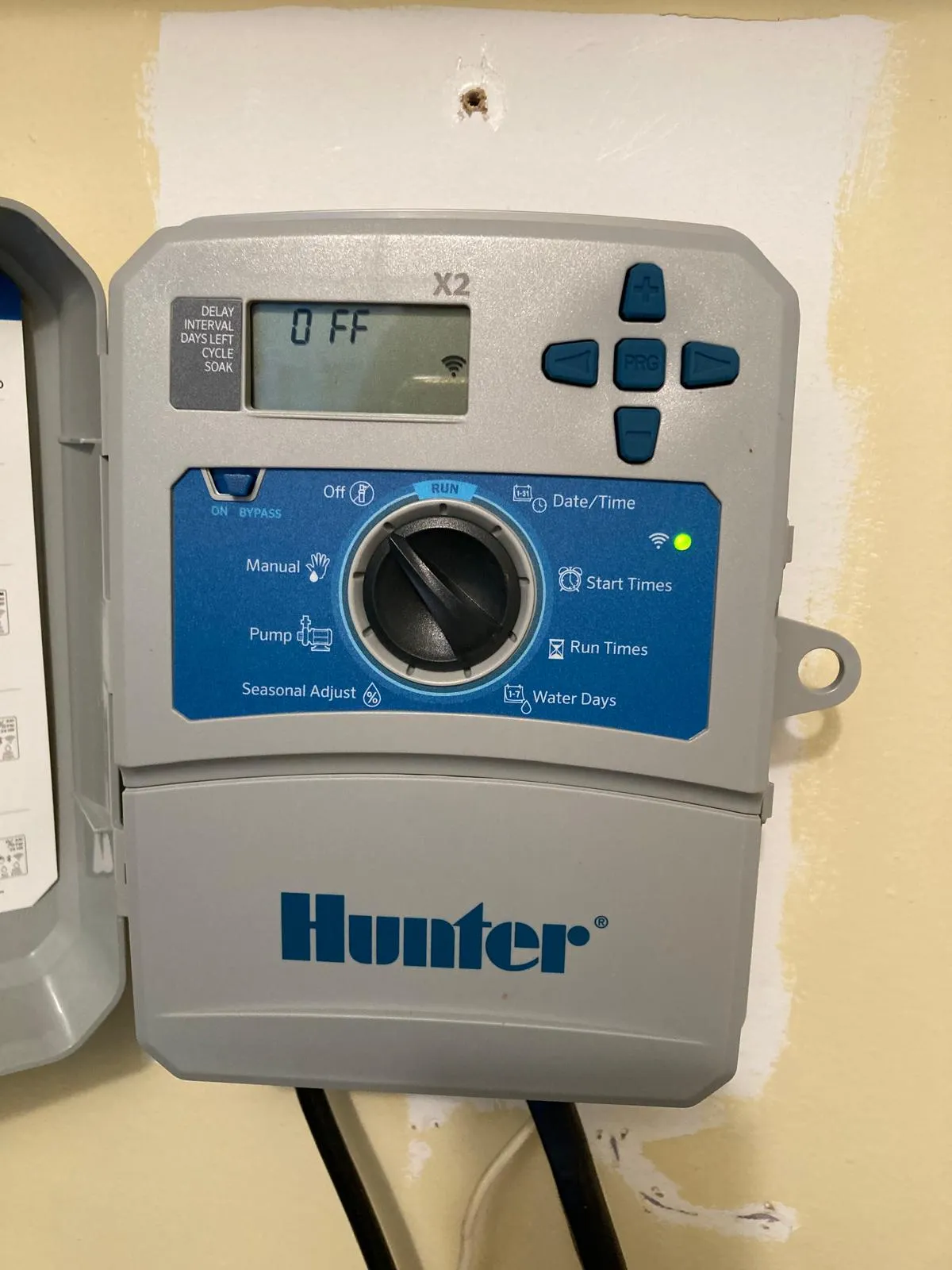
- Turn off the clock depending on the type of clock either turn the dial to off or unplug it.
- Shutting off the water supply feeding the irrigation system, this may be from the town water supply or well.
- Blowing out the system with compressed air, clearing water from the pipes, valves, and sprinkler heads. This is the most important part. Not all air compressors are created equal. Most residential air compressors have enough psi, but what really matters is the CFM (cubic feet per min) or air flow. Commercial compressors have a higher cfm to push out all the water in the lines. With long runs, an underpowered air compressor most likely won’t remove all the water from the pipes, valves, and backflow.
- Protecting the backflow preventer — usually the priciest part to replace. Keep the valves open a quarter turn on the backflow just in case there is the tiniest amount of water, so when it does freeze it allows relief.
Let Us Worry About the Timing
Come fall, our irrigation crew is keeping an eye on the forecast across the Cape and scheduling winterizations before the winter has a chance to cause trouble. Our team has special software to map out your system. If you see them taking photos and videos, that is them scanning the yard marking the zones and locating all the heads and valve boxes.
For the second-home owners we have you covered. You don’t have to be here when it’s time to shut the system down. Just turn the clock off (if in the house or garage) and we can take care of the rest outside while you enjoy the warm weather.
Ready to winterize your irrigation system? Get in touch with our irrigation team and get on the schedule before old man winter arrives.
When spring comes back around, here’s when to turn your system back on.