Protecting Your Yard from Ticks: What Cape Cod Homeowners Need to Know
By Jim | Lawn Care Tips
Long summers and gorgeous landscapes are part of what makes Cape Cod living so appealing — but so, unfortunately, is one of the country’s highest tick populations. Deer ticks (also called black-legged ticks) are everywhere out here, and they’re the main vector for Lyme disease. Fortunately, a yard that’s kept up well is one of your strongest lines of defense.
Over the years we’ve watched a handful of straightforward landscaping habits knock tick pressure way down around a property.
Know Where Ticks Actually Hang Out
Ticks aren’t jumpers or fliers — they perch on tall grass, leaf litter, and low brush and wait for something to brush against them. Damp, shady spots are where they thrive, and they’re busiest from spring into fall, peaking here on the Cape between May and August.
Pay closest attention to these areas:
- Where the lawn meets the tree line — this is ground zero. That narrow, roughly 3-foot strip between yard and woods accounts for an outsized share of tick run-ins.
- Overgrown grass and weeds — anything left unmowed hands ticks the humidity they’re after.
- Piles of leaves and brush — rotting organic matter traps moisture and makes for near-perfect tick habitat.
- Shaded, overgrown beds — particularly ones close to the house or wherever kids play.
Mow Often, Keep Things Dry
Nothing beats keeping the grass short and the yard tidy — it’s the single best thing you can do. Hot, dry, sunny conditions are hostile to ticks, so stripping away their habitat pays off fast.
- Keep mowing on a regular schedule, grass height at 3 inches or under
- Cut back overgrown shrubs and low branches so sunlight can actually reach the ground
- Clear out leaf litter, brush, and wood debris quickly, especially near the yard’s edges
- Address any soggy drainage spots
From our crew: We regularly hear from homeowners who stay on top of mowing and still find ticks. Almost always, it traces back to that overgrown strip along the back fence, or a leaf pile that’s been sitting untouched since October. Those forgotten corners are exactly where ticks pile up.
Build a Tick-Safe Buffer Strip
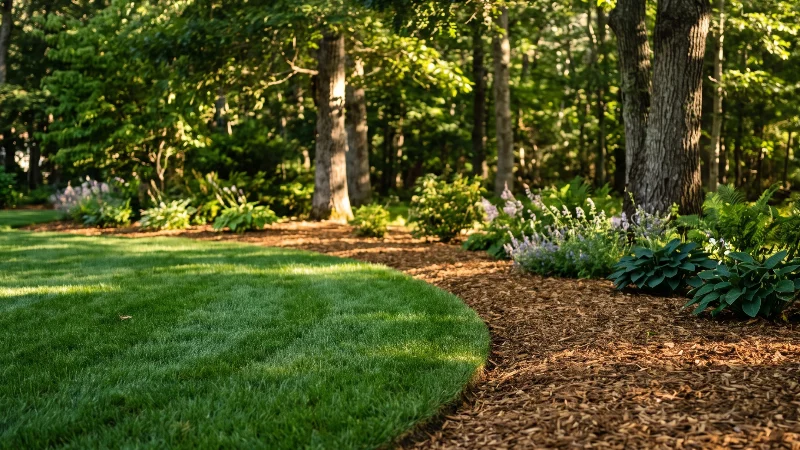
Putting a physical barrier between your lawn and any wooded edge is one of the best moves you can make. A roughly 3-foot band of cedar wood chips or gravel along the woods creates a dry, sun-baked zone that ticks tend to avoid crossing. Go with cedar over generic wood chips if you can — its natural oils bother ticks and give the barrier extra bite. Plan to refresh it every season or two once the scent fades.
What this simple border does for you:
- Keeps ticks from working their way into the lawn
- Gives kids and pets an obvious visual cue to steer clear of the woods
- Stays low-maintenance and looks tidy once it’s installed
We often build this in as part of a bigger yard cleanup or edging project — it’s one of the better returns for the effort among the upgrades we offer.
Choose Plantings with Ticks in Mind
Deer are the real problem here, since they ferry ticks from yard to yard. If your property already backs up to woods, filling it with plants deer love just invites more of them in close to the house.
A handful of options that thrive on the Cape and that deer tend to leave alone:
- Catmint (Nepeta × faassenii) — fragrant, easy to maintain, and rarely bothered by deer. Works nicely along sunny borders at the lawn’s edge.
- Bayberry (Morella pensylvanica) — a hardy native shrub that handles poor, fast-draining soil and salt spray. Deer leave it alone, and it fills in well along a wooded boundary.
- Little Bluestem (Schizachyrium scoparium) — a native ornamental grass deer skip over. Gives you soft screening and turns a warm copper-orange come autumn.
- Mountain Mint (Pycnanthemum muticum) — about as deer-proof as it gets on the Cape. The scent alone keeps browsers away.
If deer are a persistent nuisance on your property, factoring tick exposure into what you plant is worth doing — and we’re glad to help pick options suited to your site. For the full list, check our deer-resistant plant finder.
Cut Down on Wildlife Habitat Close to the House
Deer, mice, and chipmunks are the main hosts ferrying ticks around the Cape. Anything pulling them nearer your home raises your risk.
Some practical fixes:
- Keep firewood stacked away from the house and up off the ground
- Pull in bird feeders during peak tick months, or relocate them well away from the house — spilled seed draws rodents
- Keep pet food indoors
- Fill in any ground holes near the foundation where rodents might hole up
Natural, Low-Impact Approaches
For anyone who’d rather skip conventional pesticides, a few natural methods are worth working into your routine:
- Beneficial nematodes — tiny worms that go after tick larvae in the soil. Apply during spring or fall while the ground’s still moist. Safe around people, pets, and plants, and effective in the shaded, damp spots where ticks cluster.
- Cedar oil and garlic-based sprays — helpful for cutting tick activity along the lawn edge and in shrub beds. They fade faster than conventional treatments and need reapplying after rain, but consistent use adds up.
- Diatomaceous earth — food-grade DE spread along fences, under shrubs, and around stone walls dehydrates ticks on contact. It loses effectiveness when wet, but works well as a spot treatment in drier areas near the house.
No single one of these will wipe out tick pressure on a wooded Cape property by itself, but stack two or three together with solid mowing habits and a cedar buffer strip, and you’ll get most of the way there without reaching for conventional chemicals.
When to Bring in Professional Tick Treatment
Good landscaping habits go a long way, but some properties still benefit from a targeted treatment — especially those next to conservation land or heavy woods, which describes plenty of homes on the Cape.
Our licensed applicators handle tick control aimed at the spots ticks hide: the lawn edge, shrub beds, and leaf litter. We treat in five rounds from spring through fall, so coverage lasts through the summer peak and into the fall.
Our honest take: Treatments are a tool, not a cure-all. They pay off most when paired with good mowing, cleared leaf litter, and a barrier strip at the wood’s edge. A well-kept yard will always outwork a spray program on a neglected one.
Habits That Matter Once You’re in the Yard
Even on a well-maintained property, personal habits still count. A few worth making routine:
- Wear light-colored clothing while working outside — ticks stand out far better against light fabric
- Tuck pants into socks near the woods or in garden beds
- Oil of lemon eucalyptus (OLE) ranks among the more effective plant-based skin repellents — look for it listed as the active ingredient, not just a vague “natural” label
- Shower within two hours of coming inside, and check yourself over thoroughly
- Check pets before letting them back in
Cape Cod is a beautiful place to call home, and with a bit of attention to your yard, you can enjoy the whole season without the worry.
Want Help Getting Your Yard Tick-Ready?
Whether you need a spring cleanup, a border installed along the wood’s edge, or just a refresh on your mowing schedule, the team at John G. Sears & Son is ready to help. We’ve cared for properties across Cape Cod since 1931, and we know this landscape inside and out.
Give us a call and let’s talk about what your yard needs to stay safe this summer.